There is still a great deal of beauty to be found in this world, however crowded and tired it may seem.
segunda-feira, 2 de julho de 2007


terça-feira, 26 de junho de 2007
Arnaldo Jabor, My Hero, Sometimes
Arnaldo Jabor is a very well-known Brazilian journalist/commentator who really, well, really speaks his mind. I have the feeling that he is turning up the volume, so to speak, and this is not because no one is listening, but because things seem to be getting worse and worse. Deep down, he must be an optimist because otherwise he would just throw in the towel. Still, you need a strong stomach to read some of his more recent columns. Today, he wrote a "go-off" in the Segundo Caderno of Globo's newspaper (Rio edition). Everything he said was so very true, but it was rough going. Anyway, if you can read Portuguese, here it is:
A teoria do canalha: Estamos sob o ataque de um enxame de malfeitores
Arnaldo Jabor
O Globo, Segundo Caderno, p. 8, edição do dia 26 junho 2007
"Eu não sou um canalha, eu sou o canalha. Tenho orgulho de minha cara-de-pau, de minha capacidade de sobrevivência, contra todas as intempéries. Enquanto houver 20 mil cargos de confiança no país, eu estarei vivo, enquanto houver autarquias dando empréstimos a fundo perdido, eu estarei firme e forte. Não adianta as CPIs querendo me punir. Eu saio sempre bem. Enquanto houver este bendito código de processo penal, eu sempre renascerei como um rabo de lagartixa, como um retrovírus, fugindo dos antibióticos. Eu sei chorar diante de uma investigação, ostentando arrependimento, usando meus filhos, pais, pátria, tudo para me livrar. Eu declaro com voz serena: Tudo isso é uma infâmia de meus inimigos políticos. Eu não me lembro se esta loura de coxas doubradas foi minha secretária ou não. Eu explico o Brasil de hoje. Eu tenho 400 anos: avô ladrão, bisavô negreiro e tataravô degredado. Eu tenho raízes, tradição. E eu sou também 'pós-moderno', sou arte contemporânea: eu encarno a real-politik do crime, a frieza do Eu, a impávida lógica do egoísmo.
There is a strong note of desperation in this article, and I don't blame him one bit. I wonder if Mr. Jabor had access to an interview with Mr. Maluf (the ex-mayor of São Paulo, accused of absconding with the public's money, money laundering, etc.) that was published in O Globo one day after his own essay. Impunity reigns in certain circles here.
Alexandre Garcia, my hero
Here is a man who finally spoke of his outrage -- we need many more of these men and women, and we need them on the streets en masse.
What Americans Know About Brazil
.
Not much! hahaha
I have to admit that when I arrived here ten years ago, I was very nearly as ignorant as this young man (who is sort of related to me via my mother's sister's husband's side of the family, I think) who was interviewed by my daughter, Alais, during her trip to the U.S. in May 2007:
Not much! hahaha
I have to admit that when I arrived here ten years ago, I was very nearly as ignorant as this young man (who is sort of related to me via my mother's sister's husband's side of the family, I think) who was interviewed by my daughter, Alais, during her trip to the U.S. in May 2007:
segunda-feira, 18 de junho de 2007
The Most Important Thing My Father Ever Taught Me and Why I Adore Craig Ferguson
.
OK, this one is very simple...
When I was a teenager, if my father ever overheard me criticizing anyone, he would always make a point to grab me by the collar (figuratively speaking) and tell me calmly but seriously, "Be charitable." This admonition did not sink in for many years, but I finally get it.
Now, to Craig Ferguson. Well, he is pretty easy on the eyes, and he has that wonderful Scottish accent, but the real reason that I like him is this:
 "Craig Ferguson Speaks from the Heart"
http://www.youtube.com/watch?v=7bbaRyDLMvA
Links, respectively, on "social intelligence" and "mirror" neurons, trust, and empathy:
http://www.psychologicalscience.org/onlyhuman/
2006/09/power-of-two.cfm
http://www.psychologicalscience.org/onlyhuman/2006/07/velocity-of-trust.cfm
http://www.danielgoleman.info/blog/2007/06/12/empathy-without-detachment-equals-compassion/
OK, this one is very simple...
When I was a teenager, if my father ever overheard me criticizing anyone, he would always make a point to grab me by the collar (figuratively speaking) and tell me calmly but seriously, "Be charitable." This admonition did not sink in for many years, but I finally get it.
Now, to Craig Ferguson. Well, he is pretty easy on the eyes, and he has that wonderful Scottish accent, but the real reason that I like him is this:
 "Craig Ferguson Speaks from the Heart"
http://www.youtube.com/watch?v=7bbaRyDLMvA
Links, respectively, on "social intelligence" and "mirror" neurons, trust, and empathy:
http://www.psychologicalscience.org/onlyhuman/
2006/09/power-of-two.cfm
http://www.psychologicalscience.org/onlyhuman/2006/07/velocity-of-trust.cfm
http://www.danielgoleman.info/blog/2007/06/12/empathy-without-detachment-equals-compassion/
domingo, 17 de junho de 2007

Djanira, pintora brasileira
Click here for a very short biography of the artist (in Portuguese)
Click here to go to a blog post from someone who knew her briefly.
If you ever have a chance to visit Rio de Janeiro, you can see her work comprised of nearly 5,000 tiles at the Museu Nacional das Belas Artes (MNBA).
Also worth a visit: in the auditorium of the city hall of Petrópolis, RJ, restoration work is being carried out on a 39-meter panel depicting the history and landmarks of the city.
sábado, 16 de junho de 2007
Gentleness: Gentileza, Delicadeza, Ternura, Doçura, Cortesia, Empatia, e Simpatia
Gentleness is an English word that describes a significant quality of Brazilian culture that I have not found in other cultures. And yet, there is no single word in Brazilian Portuguese that describes this quality so well as the single English word "gentleness." Yesterday, I spent some time consulting with a learned Brazilian friend about this quality that permeates her culture, and she was unable to describe it with single Portuguese words. Our English word "gentleness" is embued with everything that I wish to say, but I should also add the characteristics of "tenderness" and "sweetness." You see, for these qualities to find expression between two people, even complete strangers, a more intimate degree of interaction is required. One must add a personal touch, and this requires that one risk giving a bit of oneself. Here in Brazil, there really is no risk involved because this quality of personal exchange is reciprocated naturally. Of course, I am speaking from the interior of Bahia -- things may be different in a large city like São Paulo. But, generally, wherever I have been in Brazil, there is an affinity for gentleness. If you are a gentle person and you smile openly and directly into the eyes of a Brazilian, even the most hardened and avaricious will often respond with a degree of softness.
quinta-feira, 14 de junho de 2007
My Gentleman Friend
.
On Santorini in Kamari village there lived an elderly man who must have been at least 80 or 90 years old. He always gave me a very nice smile whenever our paths crossed on the way to and from the cafenion on the little plaka above the main road in Kamari.
He was very tall and slender, and frail yet elegant with his cane and a white mustache trimmed just right, and he wore the typical Greek man's clothing of the time -- slacks, long-sleeved white shirt, buttoned-down vest, and a sweater, and that little dark-blue cap so often worn by fishermen on the Greek islands. You could almost say he was debonair, but he had nothing of the air of a raconteur, and anyone could see that he was a true gentleman.
In order to reach Kamari's small square one had to walk up a broad inclined path of jagged cobble stones. Running along the concrete-paved square on two sides there were small white-washed buildings, connected at the end, like an L. In the corner where they joined was the little cafenion belonging to my friend Vangelia's family, run by her father, Tasos, and her mother, Sofia. It had only two small metal tables painted with shiny white enamel, and I would often go there and sit with them to pass the time or eat a little feta with olive oil or sliced tomatoes on bread. At the end of the other arm of the L, there was another tiny cafenion with only one table where my gentleman acquaintance was a frequent guest. None of the buildings in between seemed to have any function, so the square was very quiet. And every day, in the afternoon, my tall elderly friend would walk up that precarious path, very slowly and carefully, using his cane with dignity, holding himself erect but not austerely, stepping among the cobble stones.
He was always greeted with approbation by his elderly compatriots. And there, three or four of the older ones would pass the afternoons together, sipping their coffee and usually playing cards or tavli, laughing and teasing each other and telling stories from the past. My knowledge of Greek was not sufficient to permit me to know what they were saying, and I so often wished that I could be a fly on the wall and understand their many stories.
One afternoon in early October as the low sun cast a warm glow over the whitewashed walls, my friend calmly approached in his usual manner, slowly coming up the path. Another older man, already seated at the little table outside the cafenion, looked over his shoulder, then leaned forward and began to tell a story, and all the other men began to laugh in an uproarious fashion. Well, you know what that kind of laughter is all about. My friend stopped as if he had been slapped. This only caused his friends to laugh harder. He turned around and walked back in the direction from which he had come, in the same erect and dignified manner as always, but with the laughter of his friends following him. And I did not see my friend again.
.
On Santorini in Kamari village there lived an elderly man who must have been at least 80 or 90 years old. He always gave me a very nice smile whenever our paths crossed on the way to and from the cafenion on the little plaka above the main road in Kamari.
He was very tall and slender, and frail yet elegant with his cane and a white mustache trimmed just right, and he wore the typical Greek man's clothing of the time -- slacks, long-sleeved white shirt, buttoned-down vest, and a sweater, and that little dark-blue cap so often worn by fishermen on the Greek islands. You could almost say he was debonair, but he had nothing of the air of a raconteur, and anyone could see that he was a true gentleman.
In order to reach Kamari's small square one had to walk up a broad inclined path of jagged cobble stones. Running along the concrete-paved square on two sides there were small white-washed buildings, connected at the end, like an L. In the corner where they joined was the little cafenion belonging to my friend Vangelia's family, run by her father, Tasos, and her mother, Sofia. It had only two small metal tables painted with shiny white enamel, and I would often go there and sit with them to pass the time or eat a little feta with olive oil or sliced tomatoes on bread. At the end of the other arm of the L, there was another tiny cafenion with only one table where my gentleman acquaintance was a frequent guest. None of the buildings in between seemed to have any function, so the square was very quiet. And every day, in the afternoon, my tall elderly friend would walk up that precarious path, very slowly and carefully, using his cane with dignity, holding himself erect but not austerely, stepping among the cobble stones.
He was always greeted with approbation by his elderly compatriots. And there, three or four of the older ones would pass the afternoons together, sipping their coffee and usually playing cards or tavli, laughing and teasing each other and telling stories from the past. My knowledge of Greek was not sufficient to permit me to know what they were saying, and I so often wished that I could be a fly on the wall and understand their many stories.
One afternoon in early October as the low sun cast a warm glow over the whitewashed walls, my friend calmly approached in his usual manner, slowly coming up the path. Another older man, already seated at the little table outside the cafenion, looked over his shoulder, then leaned forward and began to tell a story, and all the other men began to laugh in an uproarious fashion. Well, you know what that kind of laughter is all about. My friend stopped as if he had been slapped. This only caused his friends to laugh harder. He turned around and walked back in the direction from which he had come, in the same erect and dignified manner as always, but with the laughter of his friends following him. And I did not see my friend again.
.
segunda-feira, 11 de junho de 2007
Under the Shade of the Beriberi Tree

For me, there is really only one reason to visit Porto Seguro, and if I had the chance, I would go there tomorrow.
(I am still working on this one.)
Ode to my gay friend Marcos
.
Admiring, desiring, spritzing, glitzing
Flirting, screaming, tears streaming
Laughing, howling
Inventing delicious malicious rumors fictitious.
.
Admiring, desiring, spritzing, glitzing
Flirting, screaming, tears streaming
Laughing, howling
Inventing delicious malicious rumors fictitious.
.
sábado, 2 de junho de 2007
Earliest Memories of My Grandfather
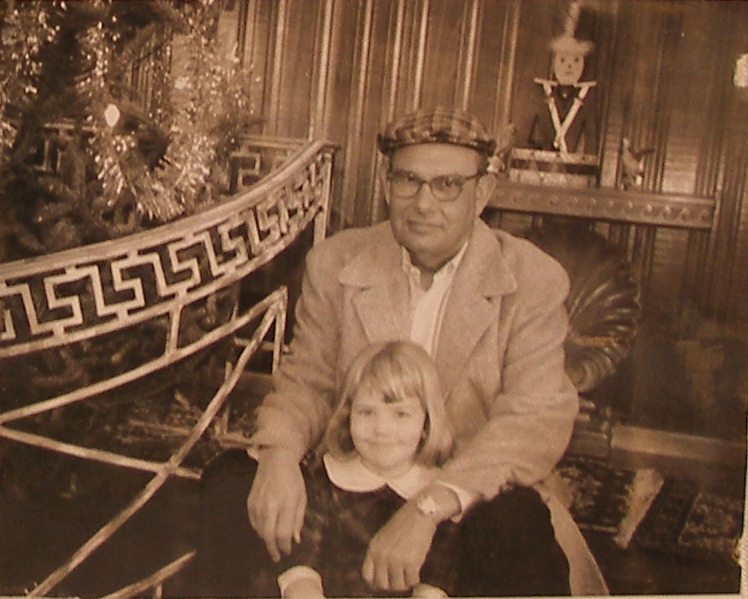
.
When I was a little kid, I didn't enjoy Sunday school much.
The first thing that bothered me was having to get dressed up in my Sunday clothes and having my hair pulled back into a pony tail held in a rubberband so tightly that my eyebrows went halfway up my forehead. I had to wear a "good" dress, thin white anklets, black patent-leather shoes that always seemed to hurt my feet, little gloves, and I couldn't sit on the ground and get dirty or I would get into trouble.
I was afraid of my Sunday school teachers just like I was of my primary school teachers who were scary human beings, old ladies, disciplinarians, rigid, with wooden paddles hanging on the wall, and besides, they were all a lot bigger than me, and I knew that if I did one little thing wrong they were going to tell my parents, that was a given!
And then, my Sunday school teachers were always telling these puzzling stories that didn't make any sense to me, particularly that one about the miracle of "the loaves and the fishes." Wow! I really couldn't make heads or tails of that one -- a big crowd of people, all dressed like Jesus, sitting or standing on the bare ground, and then being fed with loaves of bread and fish, of all things. My experience with fish was pretty much restricted to bluegill or fish sticks. There was no mention in this story of any cooking being done, so what were those people going to do with those baskets filled with bluegill? And as to the loaves, that was pretty confusing because we kids were always eating bologna on slices of Wonderbread, and I knew that back in Jesus's day, there were no refrigerators, that much I was clear on. Where were the mustard and ketchup? How could they eat just plain ol' fish?
The other story that really got me was the one about Lazarus up in the tree. He had gone up in that tree to see Jesus pass by. But, you know, in all of my life up to that time, I had never seen a grown man up in a tree, and this was beyond my comprehension.
I felt confused at Sunday school and was always relieved to be set free at the end of the hour when I could go to my grandfather's house not so very far from the church. I crossed the street and went one more block and then could take a shortcut through the grassy yard of an enormous old home and into the back door of my grandparents' house. The sidewalk was concrete, but enormous trees had spread their roots underneath lifting it up in places that seemed like hills to me, and my smooth-soled patent-leather shoes would slip and slide as I navigated these obstacles.
to be continued...
Assinar:
Postagens (Atom)